Skincare ads made from your own product photo
advrt turns a skincare product page into Meta image and video ads that keep your real bottle and label. Tests target 18+, which Meta's health rules require for cosmetics.
Free plan: 5 ad generations a month, no card. Nothing spends until you confirm a test.
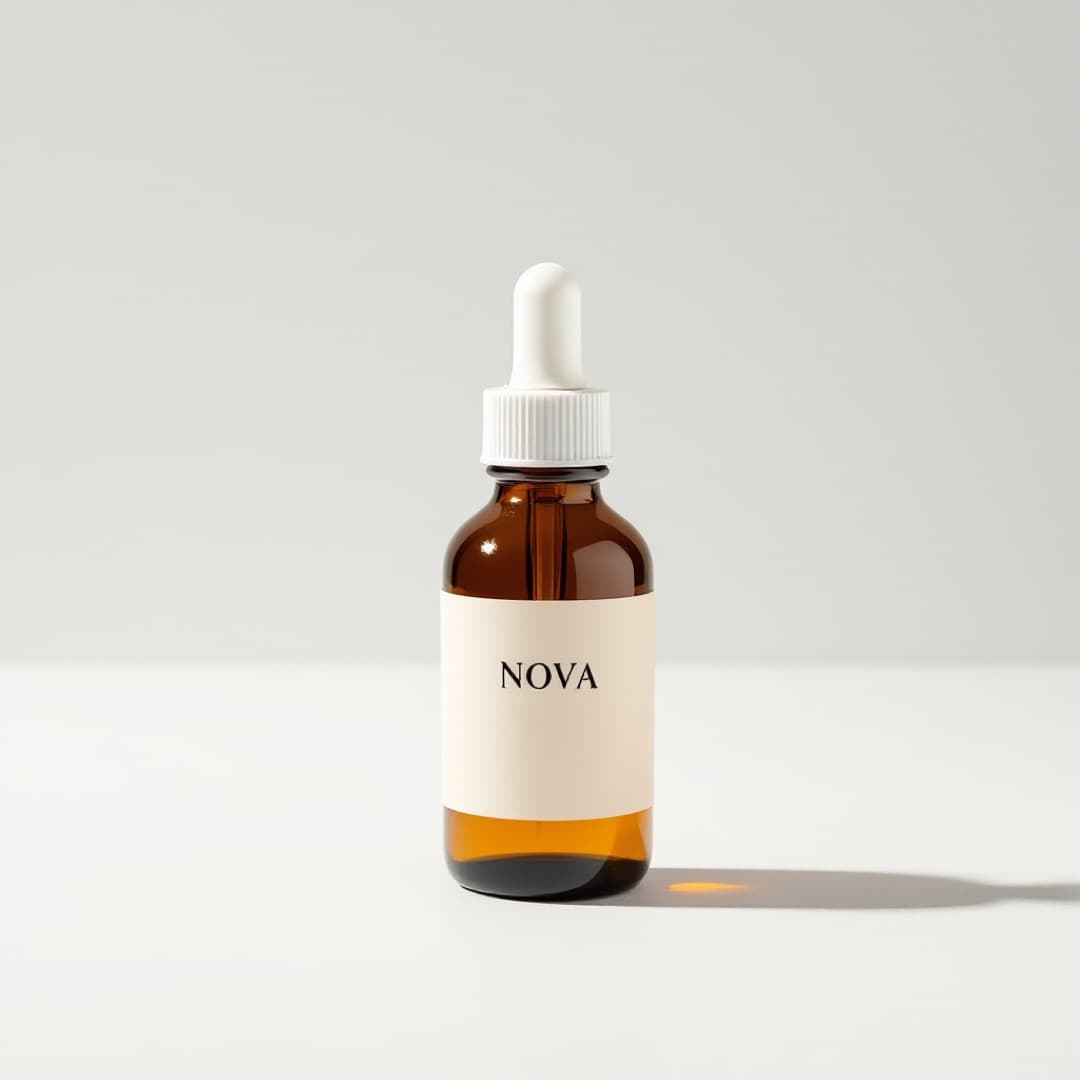
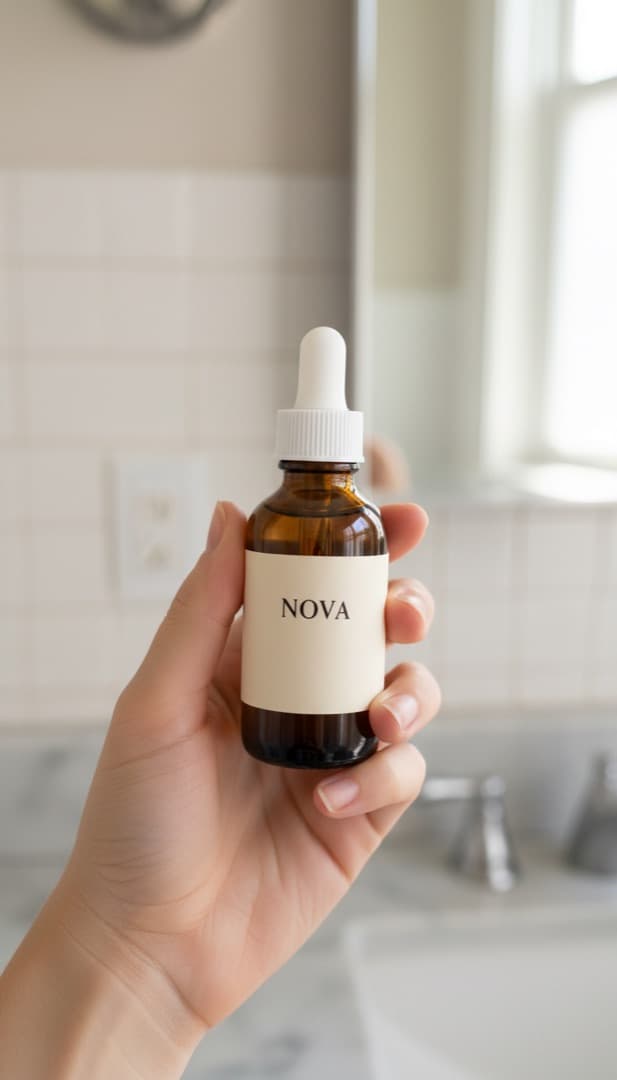
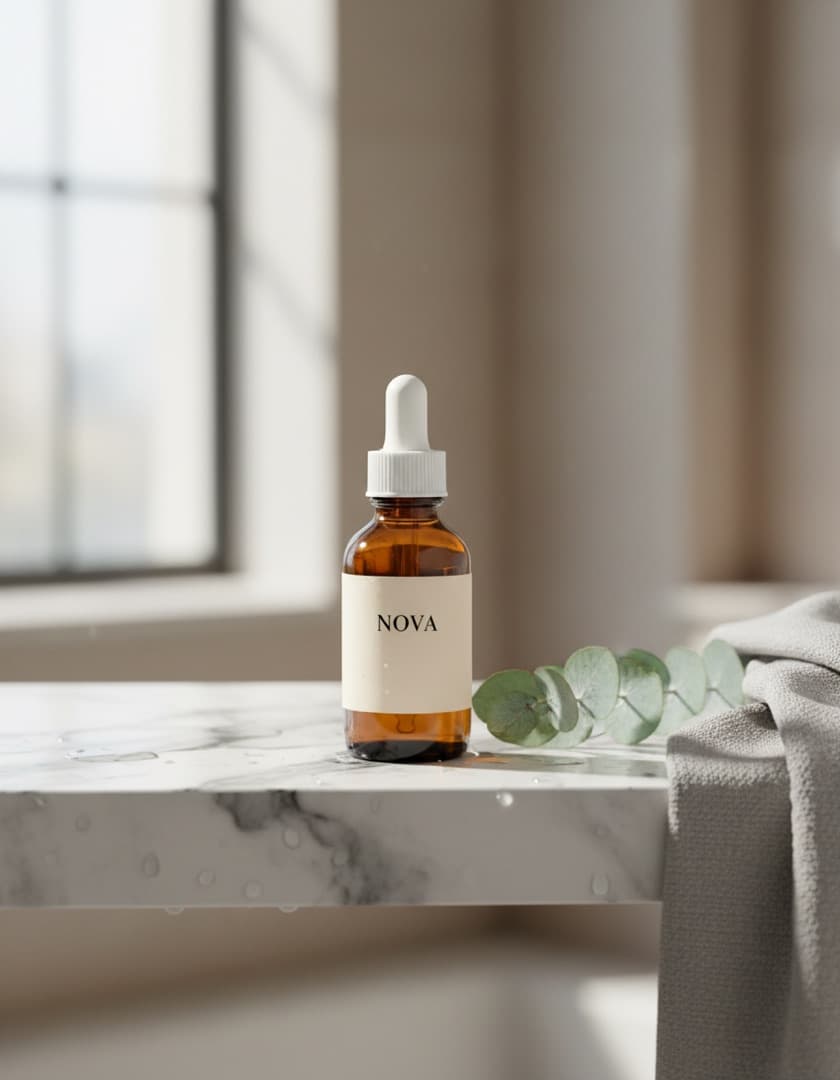
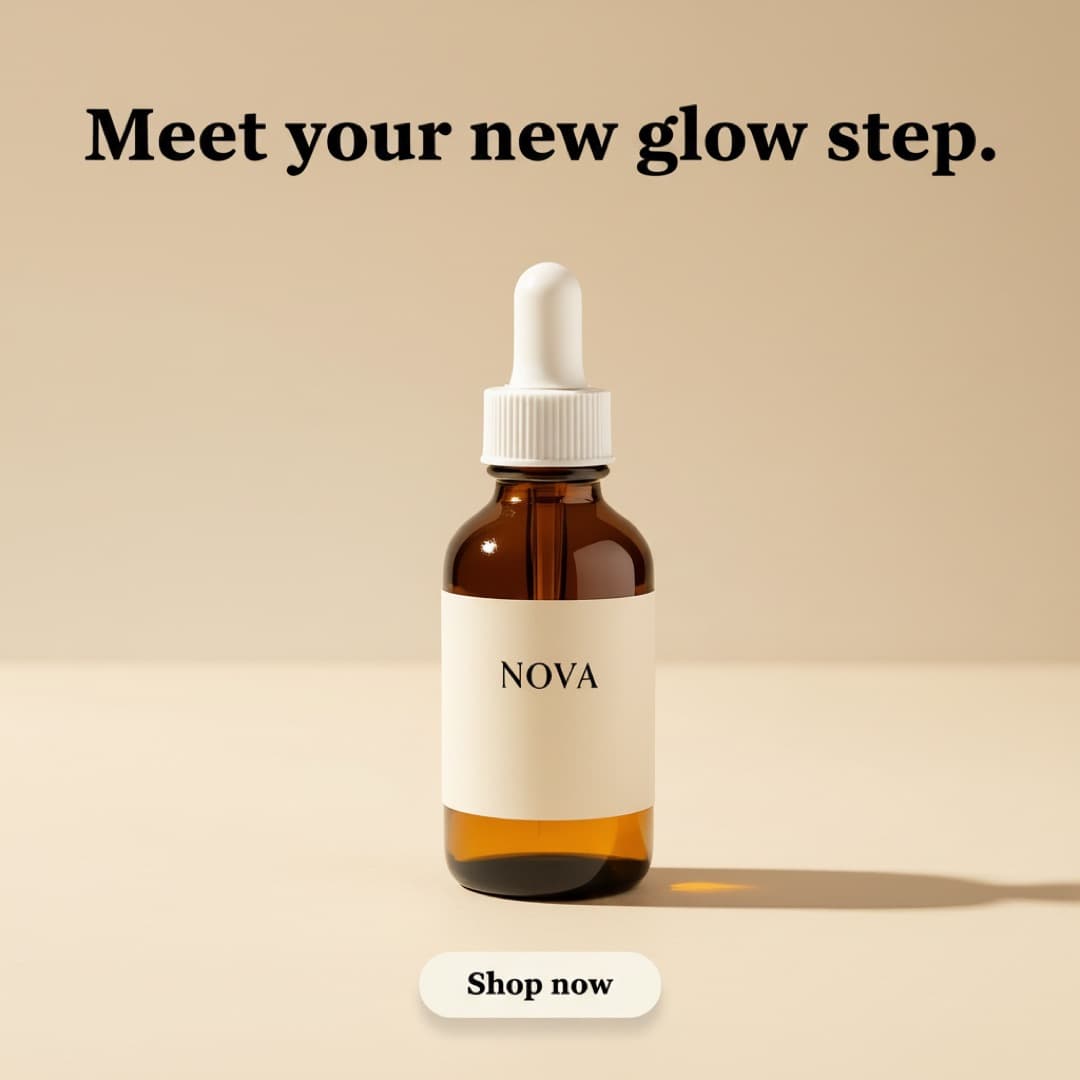
The product photo is an AI packshot of NOVA, a made-up brand. The three ads are unedited advrt outputs made from it.
Skincare ads on Meta depend on two things: the bottle in the ad has to be the bottle that arrives, and the copy has to stay inside Meta's personal-attribute and health rules. advrt starts from your product page, writes 3 to 6 angles, and builds each image by editing your actual packshot, so the label, glass and dropper are the ones you sell.
This page covers the angles that fit serums, creams and cleansers, the Meta rules that catch skincare brands most often (linked to Meta's own pages, checked October 2026), and how much spend advrt needs before it can call a skincare ad a winner or a loser.
What tends to work for skincare on Meta
- Routine beats promises. A bottle on a bathroom ledge or a hand-held “evening step” shot sells the habit without a result claim Meta's reviewers could flag.
- Problem and solution only works product-first. “A serum made for uneven tone” describes the product. “Tired of your dark spots?” asserts something about the viewer, which Meta's personal-attributes rule bans.
- Before-and-after is allowed for cosmetics, with 18+ targeting. advrt can't make an honest one: it has your product photo, not a customer's skin over eight weeks.
- Ingredient-led product hero ads (one active, one percentage) suit 1:1 feed. Hand-held 9:16 shots suit Reels and Stories.
- Budget reality: at the $34.29 Beauty and Health CAC Lebesgue reports for Facebook, advrt can call a zero-sale loser after about $79 per ad.
Six angles that fit serums and creams
Each angle maps to one of the seven formats advrt's strategy step writes. The hooks are examples we wrote for this page; advrt writes its own from your product page and will only use claims that page supports.
Ingredient spotlight
Format: Product hero
Skincare buyers shop by active ingredient. One ingredient and its strength on a clean background reads in a second in feed and promises no outcome.
- 10% niacinamide. That's the formula story.
- One active, one job, one dropper.
The routine slot
Format: Lifestyle
The main hesitation with a new serum is where it fits. Putting the bottle at a specific step answers that without a claim.
- Step two, after cleanser, before cream.
- The 30-second part of the evening.
Texture in hand
Format: UGC testimonial
Buyers can't judge consistency from a packshot. A 9:16 hand-held shot, or an 8-second Veo 3 Fast clip animated from it, shows the dropper and the bottle at real scale.
- How three drops actually look.
- Lightweight, shown not told.
What it's made for
Format: Problem and solution
State the problem as what the product is for. Meta's own examples allow “Our new lotion and creams fight wrinkles like never before!” and reject “Ready to upgrade your skin to look younger?”.
- Made for skin that's dry by noon.
- A fragrance-free serum for reactive skin.
Reviews, verbatim
Format: Social proof
Only when real reviews are on your product page; advrt's copy prompt won't invent them. Quote comments about texture and routine, not results.
- “Doesn't pill under sunscreen.” A real review, word for word.
Try size
Format: Offer
A travel size or starter set lowers the cost of trying a new active. advrt only writes offer angles when the offer is in your input.
- Start with the 15 ml.
- Your first bottle ships free.
Before you generate anything
- Use a straight-on packshot with the whole label readable. Amber glass and the dropper held up in our edits; small ingredient text is still the first thing to check at full size.
- Put the actives and their strengths on your product page. advrt's angles come from that page, and an ingredient spotlight needs a number to spotlight.
- Take “treats” and “cures” language off the page before importing if you don't want it in the copy. advrt writes from the page and doesn't screen it.
- Put the bottle size in the copy. Buyers can't tell 15 ml from 50 ml in a packshot, and hand-held shots only partly fix that.
What Meta allows in serum and cream creative
These are the rules that matter for serums, creams and cleansers.
Checked on Meta's own pages in October 2026. advrt doesn't screen ads against these rules. Meta's ad review does: it relies mainly on automated tools, typically finishes within 24 hours, checks the landing page too, and can review ads again after they go live.
- Talk about the product, never the viewer's skin.
- Meta's Personal Attributes standard bans ads that “assert or imply personal attributes”, including physical health. Its examples allow “Our new lotion and creams fight wrinkles like never before!” and reject “Ready to upgrade your skin to look younger?” and “Do you have diabetes?”. “Do you have acne?” has the same shape as the rejected examples.
- Before-and-after is permitted for cosmetics, with conditions.
- The Health and Wellness standard (updated 22 July 2026) lists “general cosmetic products, procedures, surgeries depicting before and after transformation” as allowed and requires 18+ targeting for cosmetic products, while exempting “non-permanent cosmetic and beauty products such as creams”. These ads can't contain “statements of inferiority about physical appearance”.
- Timed results need a qualifier.
- The same standard bans promising “specific outcomes within a set timeframe without disclaimers or qualifiers” in a health context. “Clearer skin in 7 days” needs one, or a different hook.
- Permanent skin whitening can't be advertised.
- Products that “cause permanent skin color change” through whitening or bleaching are prohibited outright under Health and Wellness.
- The bottle in the ad must be the bottle you ship.
- Meta's fraud and scams standard lists “product misrepresentation: promoting products or services that materially differ from what was advertised”. That's the practical reason advrt edits your packshot instead of drawing a new bottle.
How much a skincare test spends before advrt calls it
We computed this table from the verdict rules in advrt's own code. advrt expects an ad that spent S to make S ÷ CPA purchases at your baseline and tests the real count against that (Poisson, one-sided, 10% significance). An ad becomes a loser once it has spent at least 1.5× CPA and its purchase count would happen less than 10% of the time at your baseline. Each ad stops at 5× CPA as inconclusive.
| CPA level | Loser call at 0 sales | Loser call at 1 sale | Fastest winner: 3 sales within | Spend cap per ad | Four-ad test, worst case |
|---|---|---|---|---|---|
| $34.29 Beauty and Health CAC, Lebesgue | $79 | $133 | $38 | $171 | $686 |
| $50.00 Example | $115 | $194 | $55 | $250 | $1,000 |
| $80.00 Example | $184 | $311 | $88 | $400 | $1,600 |
Lebesgue's figure is Facebook CAC for its Beauty and Health stores (published 9 March 2026; the period isn't stated). The $50 and $80 rows are round examples for higher-priced serums and sets. Multipliers: loser at 2.30× CPA with no sales or 3.89× with one; winner with 3 sales by 1.10× CPA. Assumes each ad's daily budget is under 5/3 of CPA; above that, the cap becomes three days of budget.
What the table means
The written rule for a winner is at least 3 purchases and a CPA at least 15% better than your account. The statistics set a higher bar: to win by the spend cap, an ad needs 9 sales on 5× CPA of spend, a CPA about 44% below your baseline. An ad that's 20% better will usually end inconclusive. That's deliberate: small budgets can't separate small differences, and advrt would rather say so than guess.
Purchase verdicts need at least 10 purchases in your account's last 30 days. Without them, advrt judges click-through rate instead: 1,000+ impressions and a CTR at least 20% above or below your baseline.
What we saw making the ads above
The NOVA ads above are unedited. Across all three, the amber glass, white dropper and cream label match the source photo, including in the 9:16 shot where the bottle is small in a hand. Small label text is still the first thing to check at full size before anything runs.
What we couldn't make honestly: a before-and-after. advrt has a photo of the bottle, not a customer's face over time, and generating one would show a result nobody achieved. That ad still needs a real customer and a camera.
Method: one AI packshot per product (Flux Pro 1.1, 1024×1024), then advrt's image path (Nano Banana edit) for each ad, every prompt starting with advrt's product-preservation instruction: same shape, colours, materials, label, logo and packaging text.
advrt, UGC creators, a photoshoot or a generic AI tool for skincare
| Criterion | advrt | UGC creators | Product photoshoot | Generic AI ad generator |
|---|---|---|---|---|
| Cost | Free plan: 5 generations a month. Basic $19.99/mo adds live Meta tests; Pro $49/mo. Ad spend is paid to Meta separately. | From $99 per video with usage rights at Billo; from $89 at soona | soona: $39 per photo plus a $149 studio pass per booking; hand model $79/hour | AdCreative.ai from $39/mo for 20 credits; Creatify from $15/mo (monthly billing) |
| What you get | 3 to 6 angles with hooks, Meta copy and a video script, plus image ads in 1:1, 4:5, 9:16 and 16:9 made from your packshot | A real person applying the product on camera, the format skincare buyers trust for texture | Studio stills of the bottle, optionally in a hand | Template layouts and AI product scenes; copy depth varies by tool |
| Product accuracy | Edits your real photo; check small label text at full size | Exact: it's your product on real skin | Exact | Varies: some place your upload, some redraw the product |
| Live test on Meta | Yes, on Basic: one ad set per creative, equal budgets, verdicts against your own account | No. You run and judge it | No. You run and judge it | Varies by tool; check whether it judges results |
| Main tradeoff | No real skin, so no texture-on-face proof and no before-and-after | Slow to brief and ship, and one creator is one look | Stills only unless you add video at $93 a clip (soona) | Most stop at the creative; you run and judge the test yourself |
Third-party prices from each company's own pricing page, checked October 2026. Prices change; check before you buy. advrt prices come from its live plan settings.
Questions skincare brands ask
- Can skincare ads show before and after photos on Facebook?
- Meta's Health and Wellness standard (updated July 2026) allows before-and-after images for general cosmetic products, with 18+ targeting and no statements of inferiority about appearance. advrt doesn't generate them: it only has your product photo, so any “after” would be invented.
- Why was my skincare ad rejected for personal attributes?
- Usually because the copy addresses the viewer's condition: “your acne”, “your dull skin”, “Do you have rosacea?”. Meta's examples allow lines about what the product does (“fight wrinkles”) and reject lines about the viewer (“upgrade your skin to look younger”). Rewrite around the product.
- What is a normal CPA for skincare ads on Facebook?
- Lebesgue reports a $34.29 Facebook CAC for Beauty and Health stores (March 2026). Your own number matters more: advrt judges every test against your ad account's last 30 days, not an industry average.
- Do skincare brands need UGC to win on Meta?
- UGC-style creative is common in skincare because it shows the product at real scale. advrt makes UGC-style stills and 8-second image-to-video clips. It doesn't make talking creators with voice; that feature is in development.
- Will advrt change my bottle or label?
- Every image prompt starts with advrt's product-preservation instruction: same shape, colours, materials, label, logo and packaging text, and no added text on the product. It works from what's in your photo, so use a sharp, well-lit packshot and check small text at full size.
- How many skincare ads should I test at once?
- advrt puts each creative in its own ad set with an equal daily budget. Three or four is a sensible round: each ad can spend up to five times your CPA before it's marked inconclusive, so more ads means more total spend.
advrt for your kind of team
DTC & Shopify
Founders and growth leads running Shopify brands on Meta.

Solo founders
One-person stores and side projects selling a physical product.
Creators & UGC
UGC creators and small studios making ads for brands.
Other industries
Pricing
- Free $0/mo. See your own product in real ads. No card.
- Basic $19.99/mo. Launch tests on Meta and keep the winners.
- Pro $49/mo. For brands and agencies testing every week.
Sources
- Meta: Privacy Violations and Personal Attributes
- Meta: Health and Wellness ad standard (updated 22 Jul 2026)
- Meta: Introduction to the Advertising Standards
- Meta: Fraud, Scams and Deceptive Practices
- Lebesgue: Facebook benchmarks by industry (9 Mar 2026)
- Billo: how Billo pricing works (9 Oct 2026)
- soona pricing
- AdCreative.ai pricing
- Creatify pricing
Make your first skincare ad from a product link.
Paste your product page and see ads with your real product in them. Free plan: 5 ad generations a month, no card.