Sunglasses, bag and accessories ads from one product photo
advrt makes Meta ads for sunglasses, bags and accessories from your product photo. Our sunglasses video worked first try; a tote mirror selfie garbled the logo.
Free plan: 5 ad generations a month, no card. Nothing spends until you confirm a test.
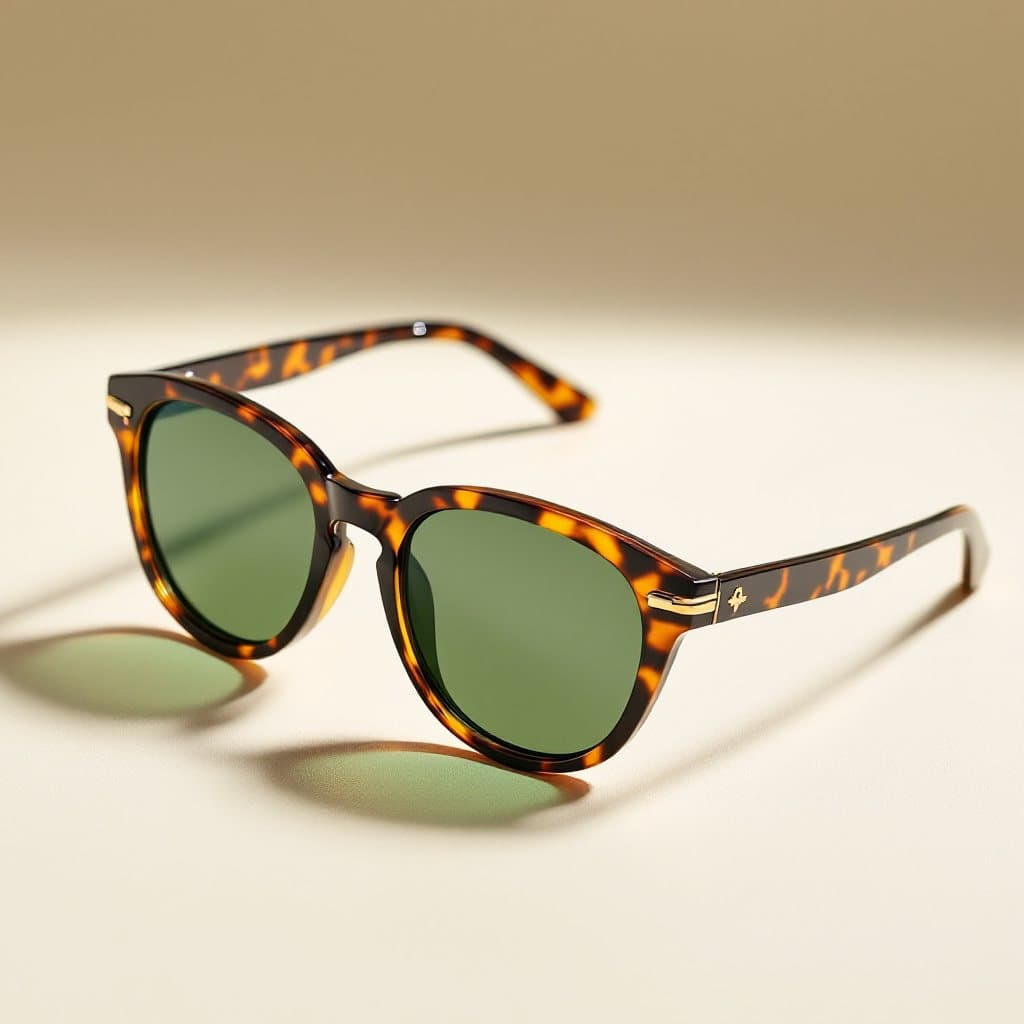
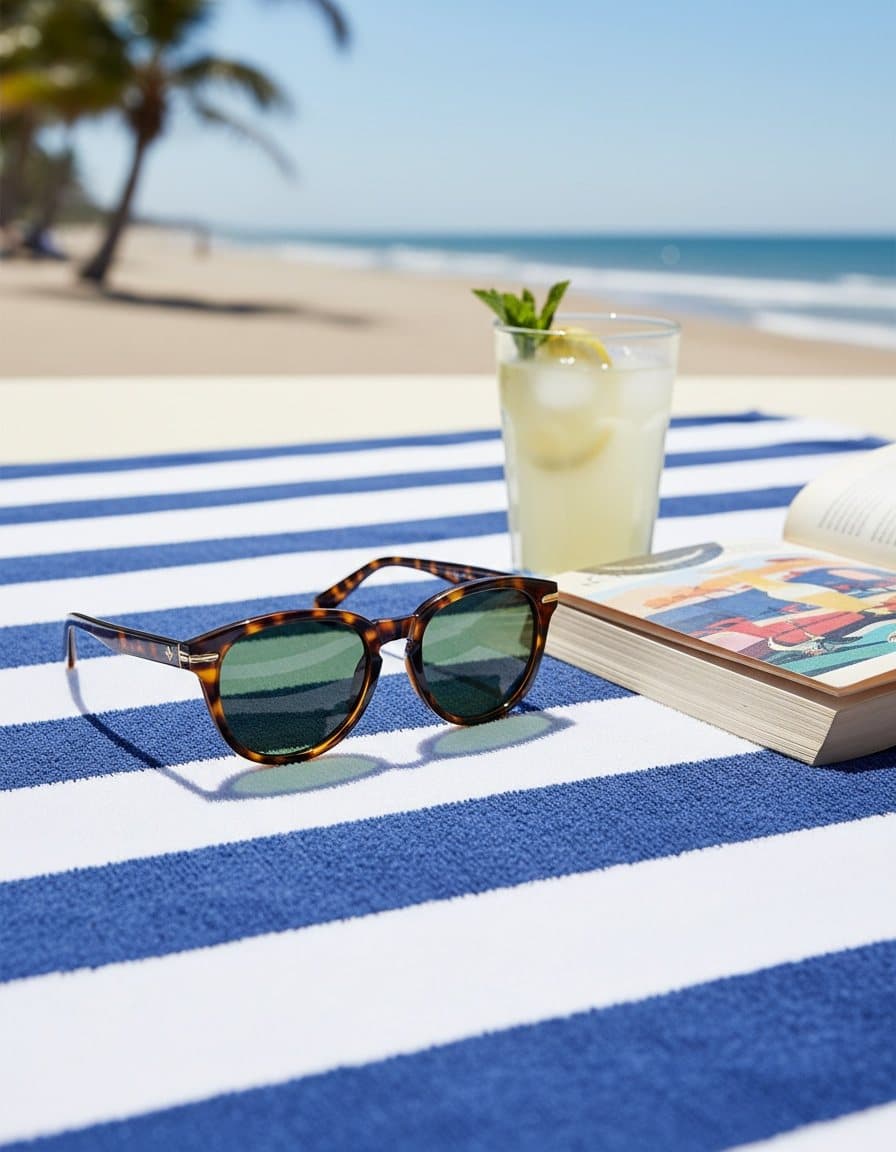

The product photo is an AI packshot of made-up sunglasses. The ads are unedited advrt outputs; the video was usable on the first render.
Accessories are worn, so their ads need a person: sunglasses on a face, a tote on a shoulder. That's where generated images take the most liberties, and it's where we saw both our best and worst results. advrt starts from your own product photo, keeps frames, lenses, hardware and logos as close to it as the edit model can, then builds scenes around them.
Below: angles for eyewear and bags, the sunglasses video that needed no re-roll, the tote selfie that reversed its own logo, Meta's rules that apply, and test costs at accessories CPAs.
What tends to work for accessories on Meta
- On-face and on-shoulder shots sell accessories, and they're where generation is least predictable. Check frames, hardware and logos at full size.
- Our sunglasses video was usable on the first Veo 3 Fast render, the only one of our three product videos that didn't need a re-roll. The frames don't rotate; the selfie camera moves.
- Mirror selfies are risky for logo'd bags. The ATLAS tote came back with its logo reversed and garbled to “SALAA”, under a fake phone-camera interface.
- Flat colour product heroes (the blue 1:1 above) are the most faithful format for small accessories.
- Budget reality: Lebesgue's Jewelry and Accessories CAC is $25.32; a zero-sale loser can be called after about $58 per ad.
Six angles for eyewear and bags
Mapped to advrt's seven formats. Example hooks we wrote; advrt writes its own from your product page.
The summer
Format: Lifestyle
Sunglasses are bought for a season and a place. A beach towel and a cold drink set both without a person in frame, which keeps the frames exact.
- Built for long summers.
- Packed before the sunscreen.
Selfie on the roof
Format: UGC testimonial
Eyewear has to be seen on a face. A selfie is the native Stories frame, and it animated cleanly in our test.
- Got asked where they're from twice today.
- Acetate frames that don't slide down.
Carries everything
Format: Product hero
For bags, capacity and versatility are the pitch. A clean product hero on a colour with one line covers both.
- Carries everything. Goes with everything.
- Fits a 14-inch laptop and lunch.
Polarised or not
Format: Comparison
Lens type is the main spec buyers don't understand. A plain explanation earns the click, if your lenses really are polarised.
- Polarised vs tinted: what changes on the water.
The cheap pair problem
Format: Problem and solution
Most people have lost or broken cheap sunglasses. Frame the problem around the product, not the person.
- Acetate frames that survive a beach bag.
- Canvas that doesn't sag after a month.
Free returns
Format: Offer
Fit and look are hard to judge online, so a return promise lowers risk. The headline ad above carries one; only use it if it's your policy.
- Free returns, no questions.
- Try them for 30 days.
Before you generate anything
- For sunglasses, upload a three-quarter view with both lenses and one temple visible. On-face shots need that angle.
- For bags, show the logo face-on and the handles in full. Edits keep what they can see.
- Avoid mirror selfies for anything with a logo, or check every letter before it runs.
- Put lens type and UV rating, or bag dimensions and materials, on the product page. Spec and comparison angles need them.
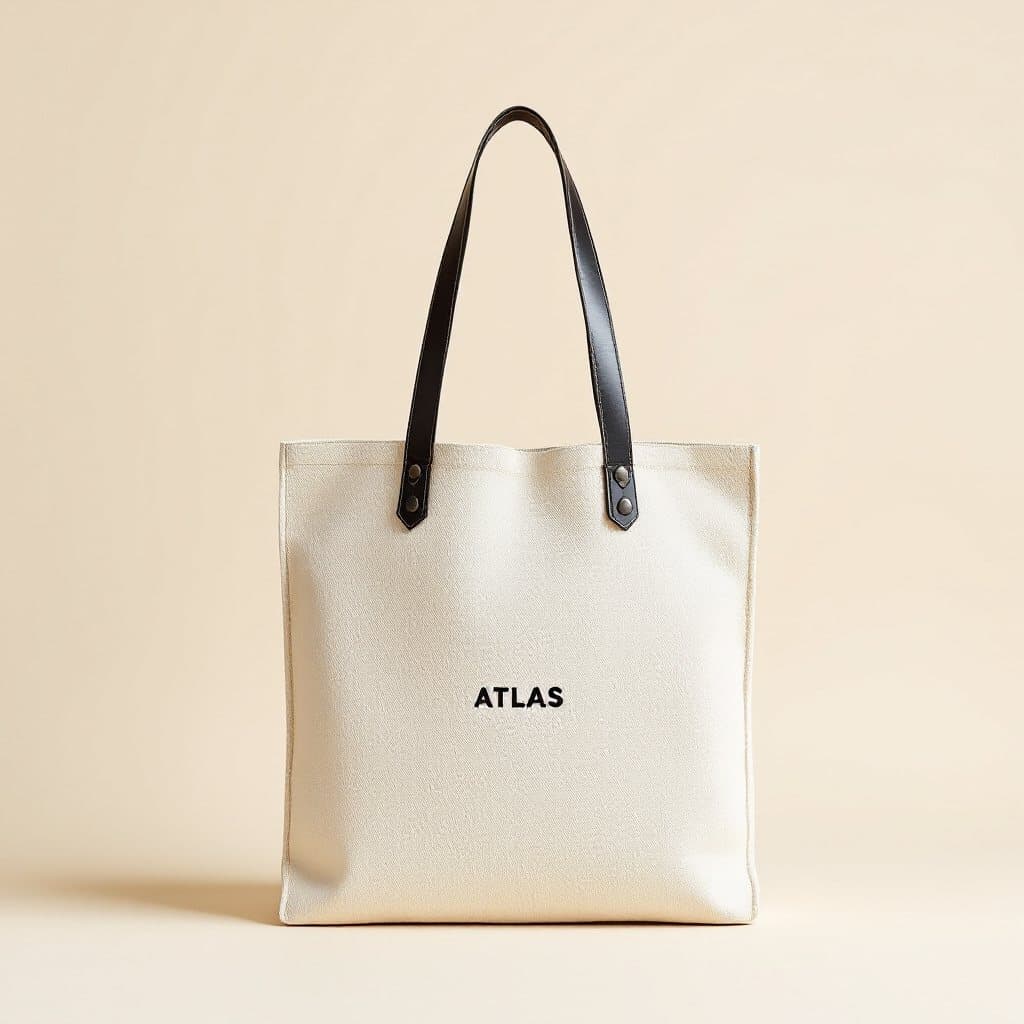
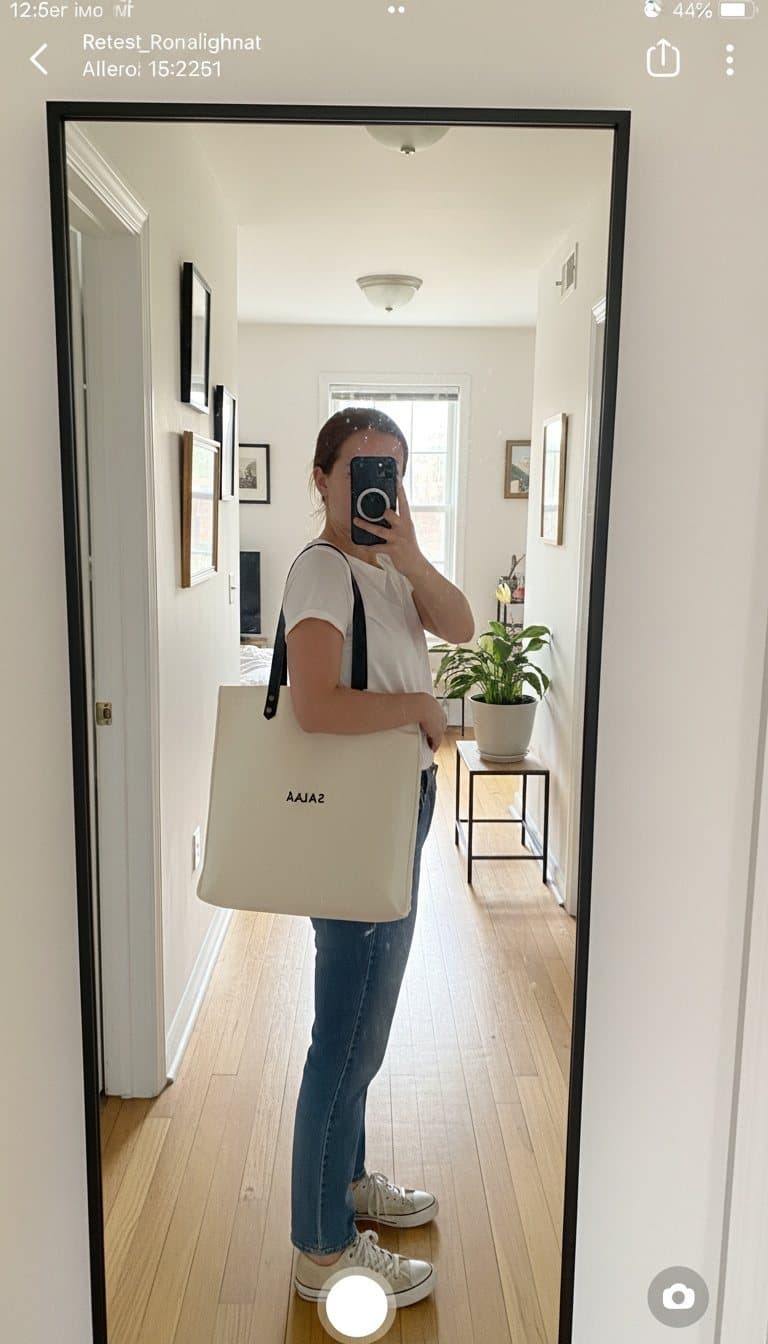
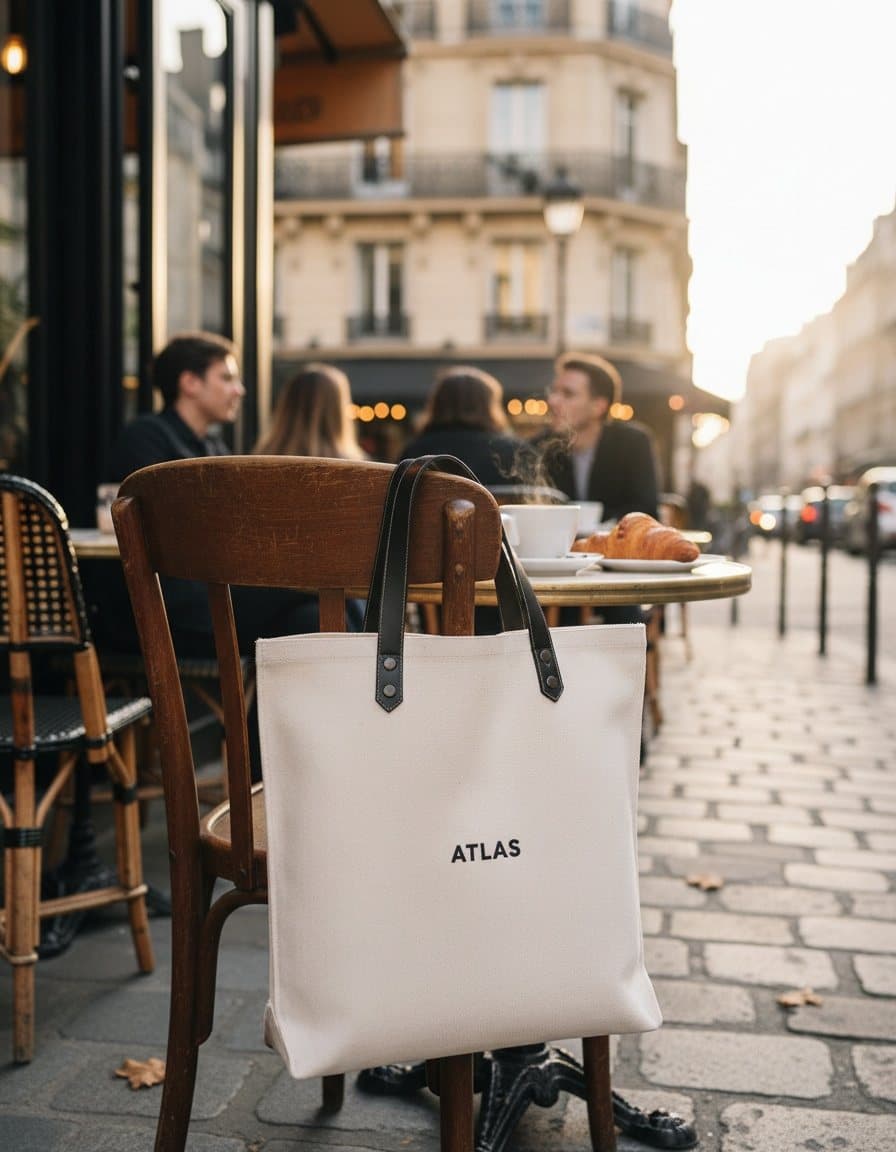

ATLAS is a made-up tote brand. Unedited advrt outputs; look at the logo in the mirror selfie.
Meta's rules for eyewear and bags
We found no accessories-specific Meta standard as of October 2026. These general rules apply.
Checked on Meta's own pages in October 2026. advrt doesn't screen ads against these rules. Meta's ad review does: it relies mainly on automated tools, typically finishes within 24 hours, checks the landing page too, and can review ads again after they go live.
- No designer lookalikes.
- Meta's IP standard covers counterfeit goods and products that copy “the trademark (name or logo) and/or distinctive features of another company's products”. Famous bag shapes and frame designs count.
- Specs in the creative must be true.
- “Product misrepresentation” is listed in Meta's fraud and scams standard. UV protection, polarisation and “genuine leather” are the claims to check.
- Return promises count as advertised terms.
- The same standard lists “violation of return or refund policies”. A “Free returns” headline has to match your actual policy.
How much an accessories test spends before advrt calls it
We computed this table from the verdict rules in advrt's own code. advrt expects an ad that spent S to make S ÷ CPA purchases at your baseline and tests the real count against that (Poisson, one-sided, 10% significance). An ad becomes a loser once it has spent at least 1.5× CPA and its purchase count would happen less than 10% of the time at your baseline. Each ad stops at 5× CPA as inconclusive.
| CPA level | Loser call at 0 sales | Loser call at 1 sale | Fastest winner: 3 sales within | Spend cap per ad | Four-ad test, worst case |
|---|---|---|---|---|---|
| $25.32 Jewelry and Accessories CAC, Lebesgue | $58 | $98 | $28 | $127 | $506 |
| $40.00 Example | $92 | $156 | $44 | $200 | $800 |
| $75.00 Example | $173 | $292 | $83 | $375 | $1,500 |
Lebesgue's figure is Facebook CAC for Jewelry and Accessories stores (published 9 March 2026). $40 and $75 are round examples for premium eyewear and leather bags. Multipliers: loser at 2.30× CPA with no sales or 3.89× with one; winner with 3 sales by 1.10× CPA. Assumes each ad's daily budget is under 5/3 of CPA; above that, the cap becomes three days of budget.
What the table means
The written rule for a winner is at least 3 purchases and a CPA at least 15% better than your account. The statistics set a higher bar: to win by the spend cap, an ad needs 9 sales on 5× CPA of spend, a CPA about 44% below your baseline. An ad that's 20% better will usually end inconclusive. That's deliberate: small budgets can't separate small differences, and advrt would rather say so than guess.
Purchase verdicts need at least 10 purchases in your account's last 30 days. Without them, advrt judges click-through rate instead: 1,000+ impressions and a CTR at least 20% above or below your baseline.
What we saw making the ads above
The sunglasses UGC video (Veo 3 Fast, 8 seconds, 720×1280, no audio) was usable on the first render. Our water bottle and coffee videos each needed a re-roll. The difference: in the sunglasses clip the product sits on a face and the camera drifts, so nothing about the product rotates.
The ATLAS tote's mirror selfie is the worst output in our showcase, and we left it up. The logo came back mirror-reversed and garbled to “SALAA”, and the model drew a phone-camera interface with nonsense text across the top. The lifestyle and feed ads kept ATLAS correctly. For logo'd bags, skip mirror selfies or check every letter.
Method: one AI packshot per product (Flux Pro 1.1, 1024×1024), then advrt's image path (Nano Banana edit) for each ad, every prompt starting with advrt's product-preservation instruction: same shape, colours, materials, label, logo and packaging text.
advrt, UGC creators, a photoshoot or a generic AI tool for accessories
| Criterion | advrt | UGC creators | Product photoshoot | Generic AI ad generator |
|---|---|---|---|---|
| Cost | Free plan: 5 generations a month. Basic $19.99/mo adds live Meta tests; Pro $49/mo. Ad spend is paid to Meta separately. | From $99 per video with usage rights at Billo; from $89 at soona | Squareshot: bags and accessories are a standard 1-credit image at $45 to $60 a credit; full-body model images use 4 credits | AdCreative.ai from $39/mo for 20 credits; Creatify from $15/mo (monthly billing) |
| What you get | Angles, Meta copy, image ads in four sizes and 8-second videos from your product photo | Real people wearing your real frames or carrying your bag | Exact product and detail shots; on-model with a model booking | Templates and AI scenes from your uploads |
| Product accuracy | Product edited from your photo; logos can garble in mirror shots | Exact | Exact | Varies by tool |
| Live test on Meta | Yes, on Basic: one ad set per creative, equal budgets, verdicts against your own account | No. You run and judge it | No. You run and judge it | Varies by tool; check whether it judges results |
| Main tradeoff | Generated faces and bodies aren't your customers | Product has to ship to each creator | On-model costs four times a product image on Squareshot | No judging against your own account's results |
Third-party prices from each company's own pricing page, checked October 2026. Prices change; check before you buy. advrt prices come from its live plan settings.
Questions accessories brands ask
- What ad formats work for sunglasses on Meta?
- Brands usually test an on-face selfie, a scene without a person (beach, dashboard) and a product hero on colour. advrt makes all three from one product photo and tests them in separate ad sets.
- Can AI put my sunglasses on a person accurately?
- In our test the tortoiseshell frames and green lenses held up in both the selfie still and the 8-second video. Frames are rigid and simple, which helps. Check hinges and logos at full size.
- Why did the logo on my bag come out backwards?
- Mirror selfies. A real mirror reverses text, and the model half-imitates that, scrambling letters in the process. Our ATLAS tote came back as “SALAA”. Ask for a non-mirror scene for logo'd products.
- What CPA should an accessories brand expect on Meta?
- Lebesgue reports a $25.32 Facebook CAC for Jewelry and Accessories stores (March 2026). Premium eyewear and leather goods typically run higher. advrt judges your tests against your own account's last 30 days.
- Can I say my sunglasses block UV in the ad?
- Only if they do and you can show it. Meta's fraud and scams standard covers product misrepresentation. advrt's copy prompt only uses claims on your product page.
advrt for your kind of team

DTC & Shopify
Founders and growth leads running Shopify brands on Meta.

Solo founders
One-person stores and side projects selling a physical product.
Creators & UGC
UGC creators and small studios making ads for brands.
Other industries
Pricing
- Free $0/mo. See your own product in real ads. No card.
- Basic $19.99/mo. Launch tests on Meta and keep the winners.
- Pro $49/mo. For brands and agencies testing every week.
Sources
- Meta: Third-Party Intellectual Property Infringement
- Meta: Introduction to the Advertising Standards
- Meta: Fraud, Scams and Deceptive Practices
- Lebesgue: Facebook benchmarks by industry (9 Mar 2026)
- Billo: how Billo pricing works (9 Oct 2026)
- soona pricing
- AdCreative.ai pricing
- Creatify pricing
- Squareshot pricing
Make your first accessories ad from a product link.
Paste your product page and see ads with your real product in them. Free plan: 5 ad generations a month, no card.