Pet product ads for treats, food and toys
advrt makes Meta ads for dog treats, pet food and toys from your product photo, with your real bag and a generated pet. Meta has no pet-product ad standard; claims still count.
Free plan: 5 ad generations a month, no card. Nothing spends until you confirm a test.
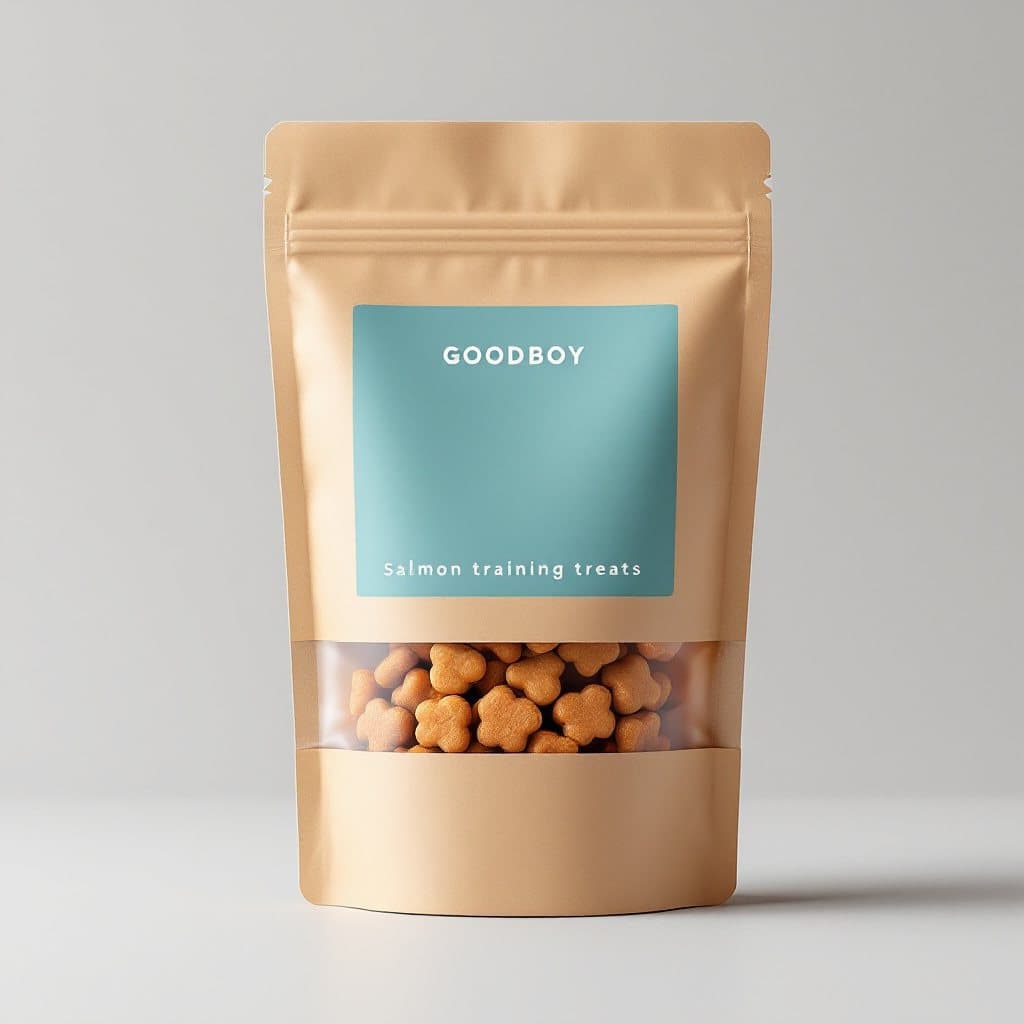
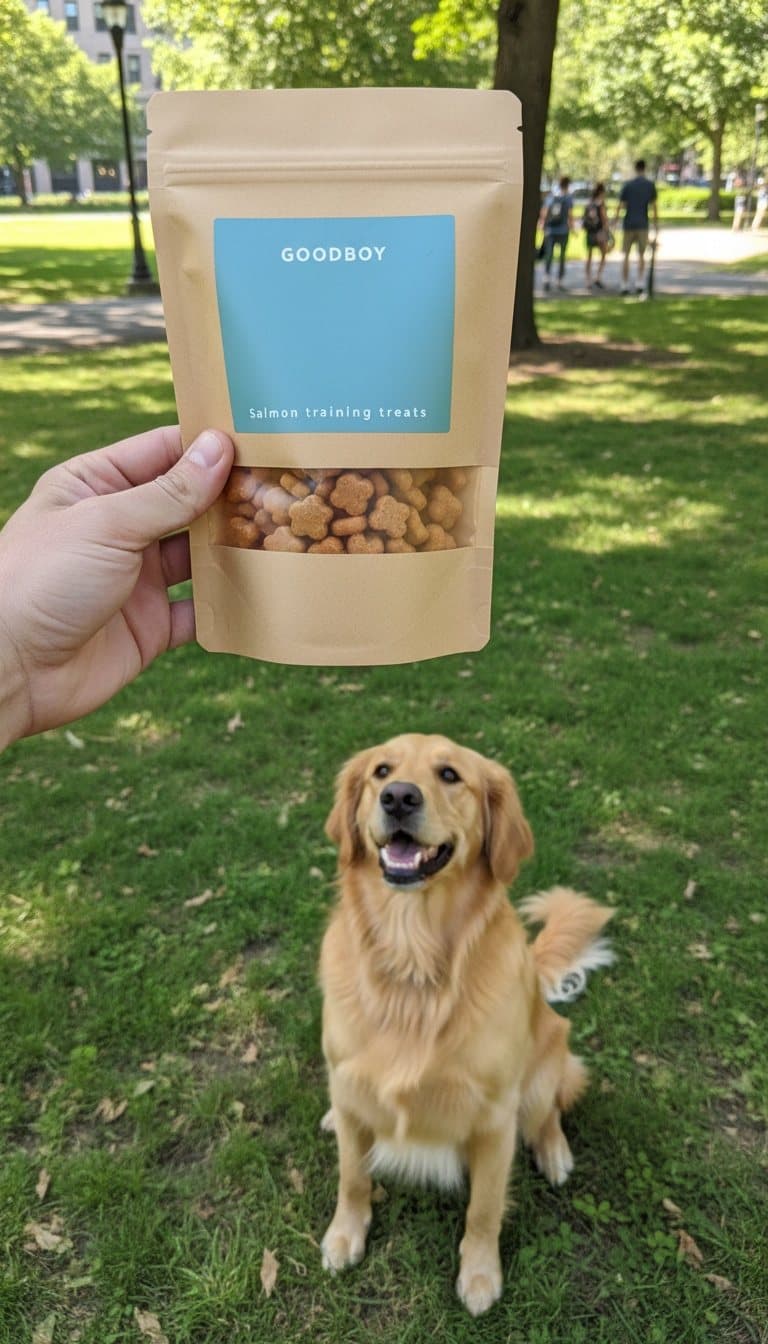
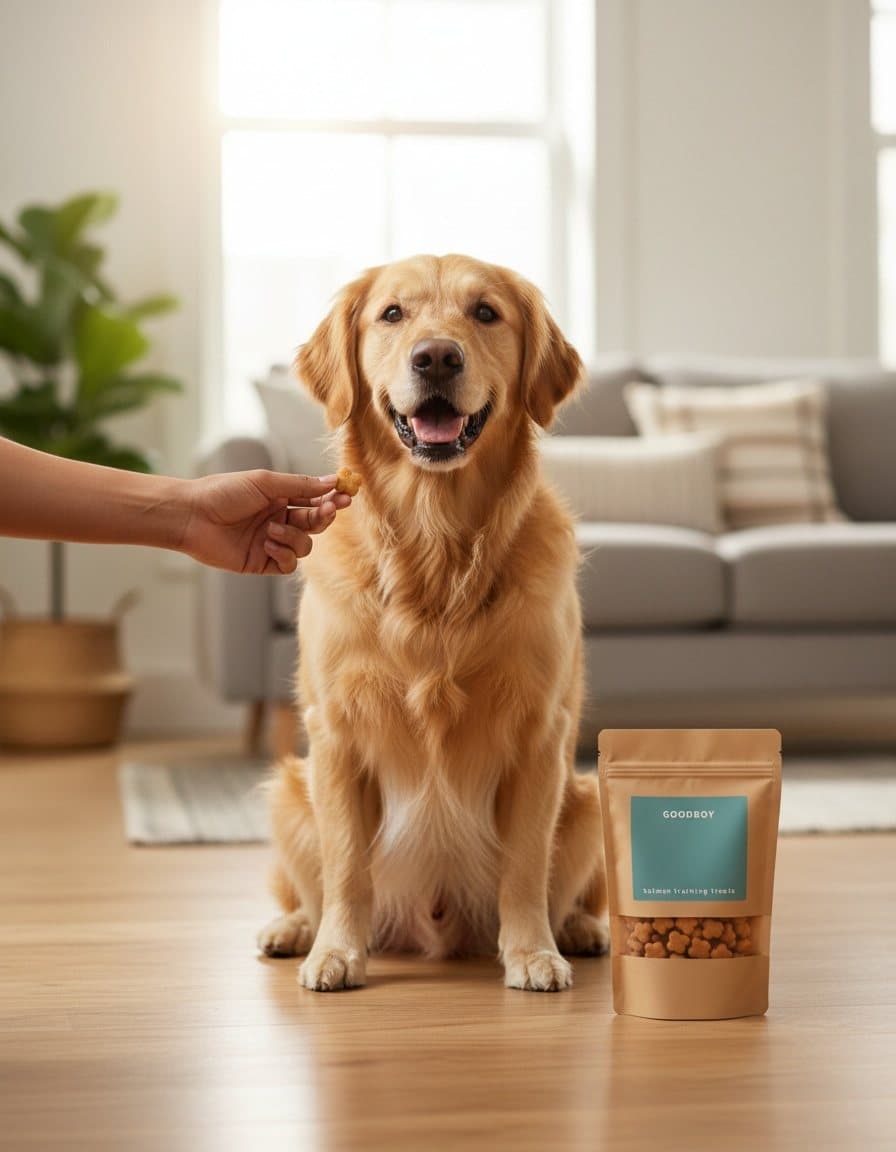
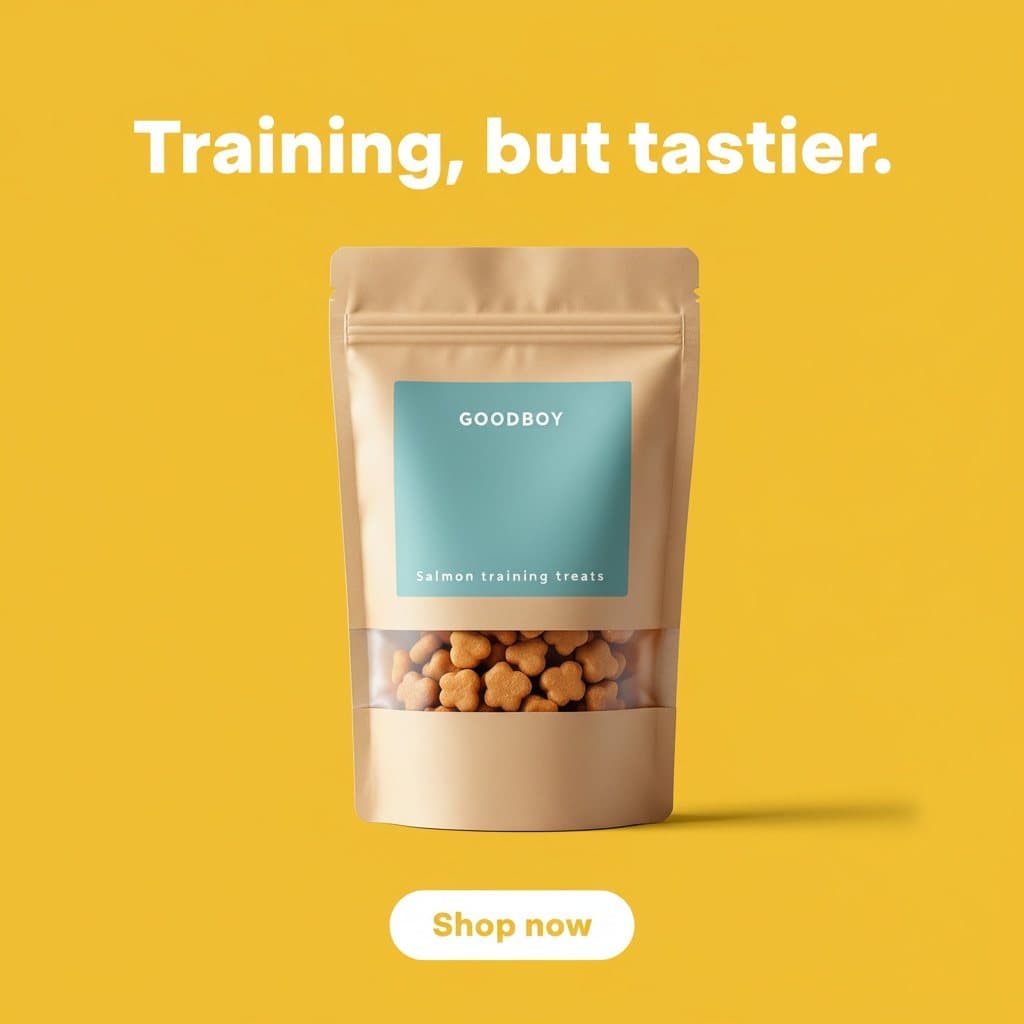
The product photo is an AI packshot of GOODBOY, a made-up treat brand. The three ads are unedited advrt outputs.
In pet ads, the animal is the hook. People stop for a dog looking at a treat bag long before they read the copy. advrt edits your own product photo into those moments, keeping the bag, label and the treats in the window, and puts a generated dog or cat in the scene.
Below: angles that fit treats, food and toys, what Meta's rules actually say about pet products (less than most guides suggest), where a generated dog falls short of your customers' real ones, and test costs at pet-category CPAs.
What tends to work for pet products on Meta
- The pet is the hook. Both GOODBOY ads with people show a dog looking at the treat. That's the frame to test first.
- Training and routine angles (recall in the park, a sit for a treat) sell treats on use, not on health claims.
- Generated dogs are generic. If your brand runs on customers' own pets, their real photos will feel more like you than a generated retriever.
- Meta has no pet-product ad standard. Its animal rule bans peer-to-peer sales of live animals, which treat, food and toy brands don't touch.
- Budget reality: Lebesgue's Dogs, Cats and Pets CAC is $23.24; a zero-sale loser can be called after about $54 per ad.
Six angles for treats, food and toys
Mapped to advrt's seven formats. Example hooks we wrote; advrt writes its own from your product page.
Training session
Format: Lifestyle
A dog sitting for a treat shows the use case and the product in one frame, as the GOODBOY living-room shot does.
- Training, but tastier.
- Sit. Stay. Salmon.
Park recall
Format: UGC testimonial
Holding the bag up while the dog waits is a believable owner's-phone shot. It works in 9:16 for Stories and Reels.
- The only bag that gets him back from the other dogs.
- Recall training, day 12.
Short ingredient list
Format: Product hero
Pet owners read labels. One or two ingredients on the front of the pack is a fact, not a health claim.
- Salmon. Oat. That's the list.
- Single protein, small enough for training.
The picky eater
Format: Problem and solution
The problem belongs to the dog, not the owner, so it stays clear of Meta's personal-attribute rule.
- For the dog who spits out everything else.
Versus the biscuit
Format: Comparison
Compare against a generic category (“supermarket biscuits”) with facts from your own label.
- One protein vs the 20-ingredient biscuit.
Autoship
Format: Offer
Treats and food are repeat purchases. Subscription discounts suit the category, if you offer one.
- Never run out mid-training.
- Subscribe and save on every bag.
Before you generate anything
- Upload the pack with its window or contents visible. What's in the reference is what the edits preserve.
- Put the species and size the product is for on the product page. advrt's angles and image concepts are written from it.
- Check the animal in every image: species, size, and whether it's actually engaging with your product.
- If you sell pet supplements, remove treatment claims from the page before importing. Meta's drug rules cover claims about animals.
What Meta's rules say about treats, food and toys
Less than most pet ad guides imply. As of October 2026:
Checked on Meta's own pages in October 2026. advrt doesn't screen ads against these rules. Meta's ad review does: it relies mainly on automated tools, typically finishes within 24 hours, checks the landing page too, and can review ads again after they go live.
- Live animal sales: peer-to-peer is banned, businesses are allowed.
- Meta's animals standard says ads “must not promote peer-to-peer sales or trade of live non-endangered animals”. Legitimate businesses, adoption and rehoming are allowed. It says nothing about pet products.
- Treatment claims for animals fall under drug rules.
- The Drugs and Pharmaceuticals standard's cannabis section bans claims a product “can treat, cure, prevent, mitigate or diagnose a disease or medical condition in humans or animals”. That's the only pet mention on the page; pet CBD is the obvious risk.
- Food and treat claims must be true.
- “Product misrepresentation” is in Meta's fraud and scams standard. “Vet recommended” needs a vet who recommends it.
How much a pet product test spends before advrt calls it
We computed this table from the verdict rules in advrt's own code. advrt expects an ad that spent S to make S ÷ CPA purchases at your baseline and tests the real count against that (Poisson, one-sided, 10% significance). An ad becomes a loser once it has spent at least 1.5× CPA and its purchase count would happen less than 10% of the time at your baseline. Each ad stops at 5× CPA as inconclusive.
| CPA level | Loser call at 0 sales | Loser call at 1 sale | Fastest winner: 3 sales within | Spend cap per ad | Four-ad test, worst case |
|---|---|---|---|---|---|
| $23.24 Dogs, Cats and Pets CAC, Lebesgue | $54 | $90 | $26 | $116 | $465 |
| $15.00 Example | $35 | $58 | $17 | $75 | $300 |
| $40.00 Example | $92 | $156 | $44 | $200 | $800 |
Lebesgue's figure is Facebook CAC for Dogs, Cats and Pets stores (published 9 March 2026). $15 and $40 are round examples for a single treat bag and a food subscription. Multipliers: loser at 2.30× CPA with no sales or 3.89× with one; winner with 3 sales by 1.10× CPA. Assumes each ad's daily budget is under 5/3 of CPA; above that, the cap becomes three days of budget.
What the table means
The written rule for a winner is at least 3 purchases and a CPA at least 15% better than your account. The statistics set a higher bar: to win by the spend cap, an ad needs 9 sales on 5× CPA of spend, a CPA about 44% below your baseline. An ad that's 20% better will usually end inconclusive. That's deliberate: small budgets can't separate small differences, and advrt would rather say so than guess.
Purchase verdicts need at least 10 purchases in your account's last 30 days. Without them, advrt judges click-through rate instead: 1,000+ impressions and a CTR at least 20% above or below your baseline.
What we saw making the ads above
In the GOODBOY ads, the pouch kept its kraft finish, teal label and clear window, and the treats visible in the window kept their shape in all three. The dogs are generated: the same golden retriever look appears in both the living room and the park.
That's the limit for pet brands. A generated retriever is a believable dog, but it isn't anyone's dog. Brands built on customer pet photos should test generated scenes against their own customer content, and let the results decide.
Method: one AI packshot per product (Flux Pro 1.1, 1024×1024), then advrt's image path (Nano Banana edit) for each ad, every prompt starting with advrt's product-preservation instruction: same shape, colours, materials, label, logo and packaging text.
advrt, UGC creators, a pet shoot or a generic AI tool
| Criterion | advrt | UGC creators | Product photoshoot | Generic AI ad generator |
|---|---|---|---|---|
| Cost | Free plan: 5 generations a month. Basic $19.99/mo adds live Meta tests; Pro $49/mo. Ad spend is paid to Meta separately. | From $99 per video with usage rights at Billo; from $89 at soona | soona: $39 per photo, $149 studio pass, pet model $99/hour | AdCreative.ai from $39/mo for 20 credits; Creatify from $15/mo (monthly billing) |
| What you get | Angles, Meta copy and image ads with your real bag and a generated pet, in four sizes | Real owners with real pets, which pet buyers trust most | Exact product with a booked pet model | Templates and AI scenes from your uploads |
| Product accuracy | Bag edited from your photo; the animal is generated | Exact | Exact | Varies by tool |
| Live test on Meta | Yes, on Basic: one ad set per creative, equal budgets, verdicts against your own account | No. You run and judge it | No. You run and judge it | Varies by tool; check whether it judges results |
| Main tradeoff | Generated pets are generic; breed-specific brands may not fit | Pets don't take direction; reshoots are common | Pet models bill by the hour, and patience costs time | No judging against your own account's results |
Third-party prices from each company's own pricing page, checked October 2026. Prices change; check before you buy. advrt prices come from its live plan settings.
Questions pet brands ask
- Does Meta restrict pet product ads?
- Not as a category. We found no pet-product ad standard as of October 2026. Meta bans peer-to-peer live animal sales and treatment claims for animals in its cannabis rules; ordinary treats, food and toys fall under the general rules.
- Can I say my dog treats are vet recommended?
- Only if a vet actually recommends them. Meta's fraud and scams standard covers product misrepresentation, and advrt's copy prompt is told never to invent certifications, reviews or results.
- Can AI put a dog in my product ad?
- Yes. advrt keeps your bag from your photo and generates the pet and scene. The dog is believable but generic; for breed-specific products, check that the breed matches your buyers.
- What CPA should a pet brand expect on Meta?
- Lebesgue reports a $23.24 Facebook CAC for Dogs, Cats and Pets stores (March 2026). Subscriptions change the math. advrt judges against your own account's last 30 days.
- What makes a pet ad convert?
- Usually the animal in the first frame and a clear use case. Which angle wins for your product is what a live test is for: advrt runs each creative in its own ad set with an equal budget.
- Do pet ads need age targeting?
- Not as a category. advrt's tests target 18+ by default anyway.
advrt for your kind of team

DTC & Shopify
Founders and growth leads running Shopify brands on Meta.

Amazon & catalog
Amazon, Walmart and Etsy sellers sending Meta and TikTok traffic to their listings.

Solo founders
One-person stores and side projects selling a physical product.
Further reading
Other industries
Pricing
- Free $0/mo. See your own product in real ads. No card.
- Basic $19.99/mo. Launch tests on Meta and keep the winners.
- Pro $49/mo. For brands and agencies testing every week.
Sources
- Meta: Sale of Non-Endangered Animals and Endangered Species
- Meta: Drugs and Pharmaceuticals
- Meta: Introduction to the Advertising Standards
- Meta: Fraud, Scams and Deceptive Practices
- Lebesgue: Facebook benchmarks by industry (9 Mar 2026)
- Billo: how Billo pricing works (9 Oct 2026)
- soona pricing
- AdCreative.ai pricing
- Creatify pricing
Make your first pet ad from a product link.
Paste your product page and see ads with your real product in them. Free plan: 5 ad generations a month, no card.