Static ad generator for headline feed ads with your real product
advrt makes 1:1, 4:5, 9:16 and 16:9 static ads by editing your product photo, with an optional headline drawn onto the image. No layer editor: change the brief and regenerate.
The simple static that still carries a lot of Meta spend: your product, a short headline, a clean background. We audited 13 of them for spelling, length and what else ended up on the image.
Free plan: 5 ad generations a month, no card.
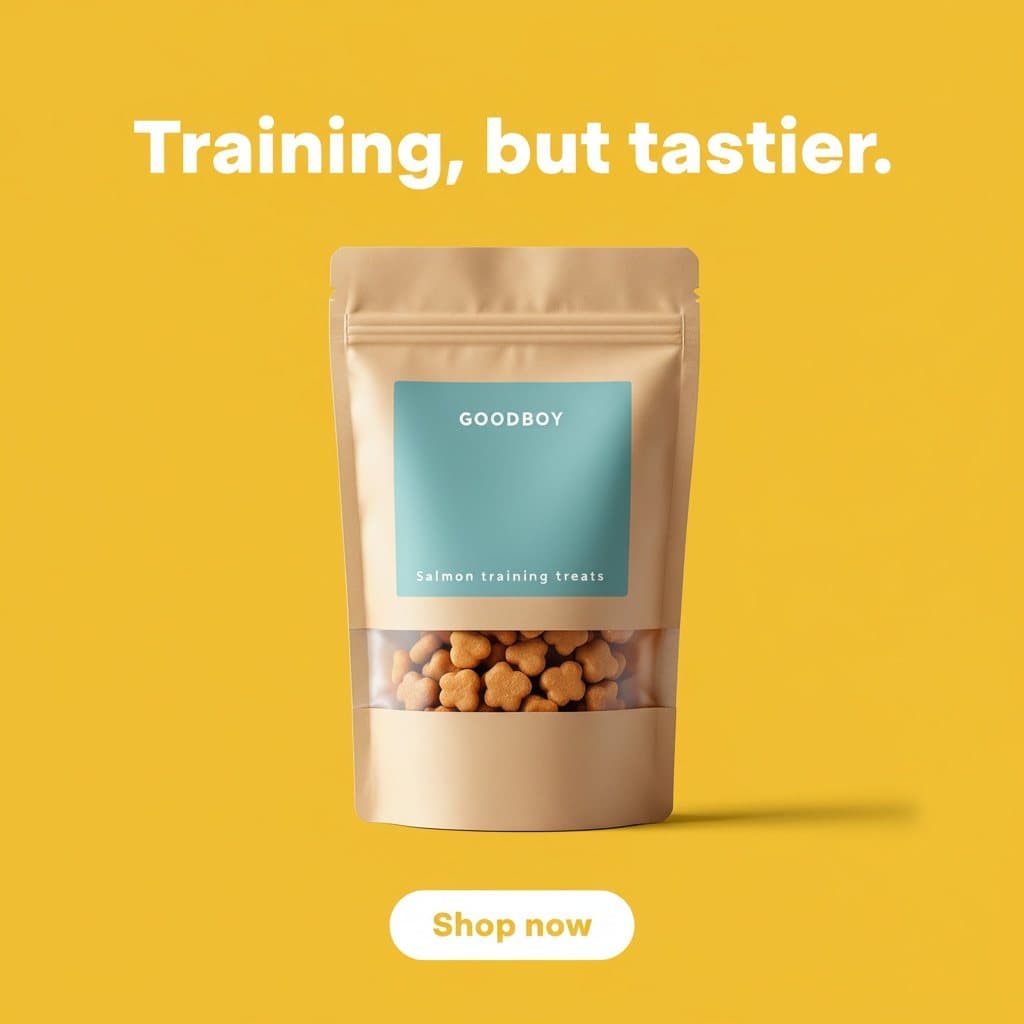
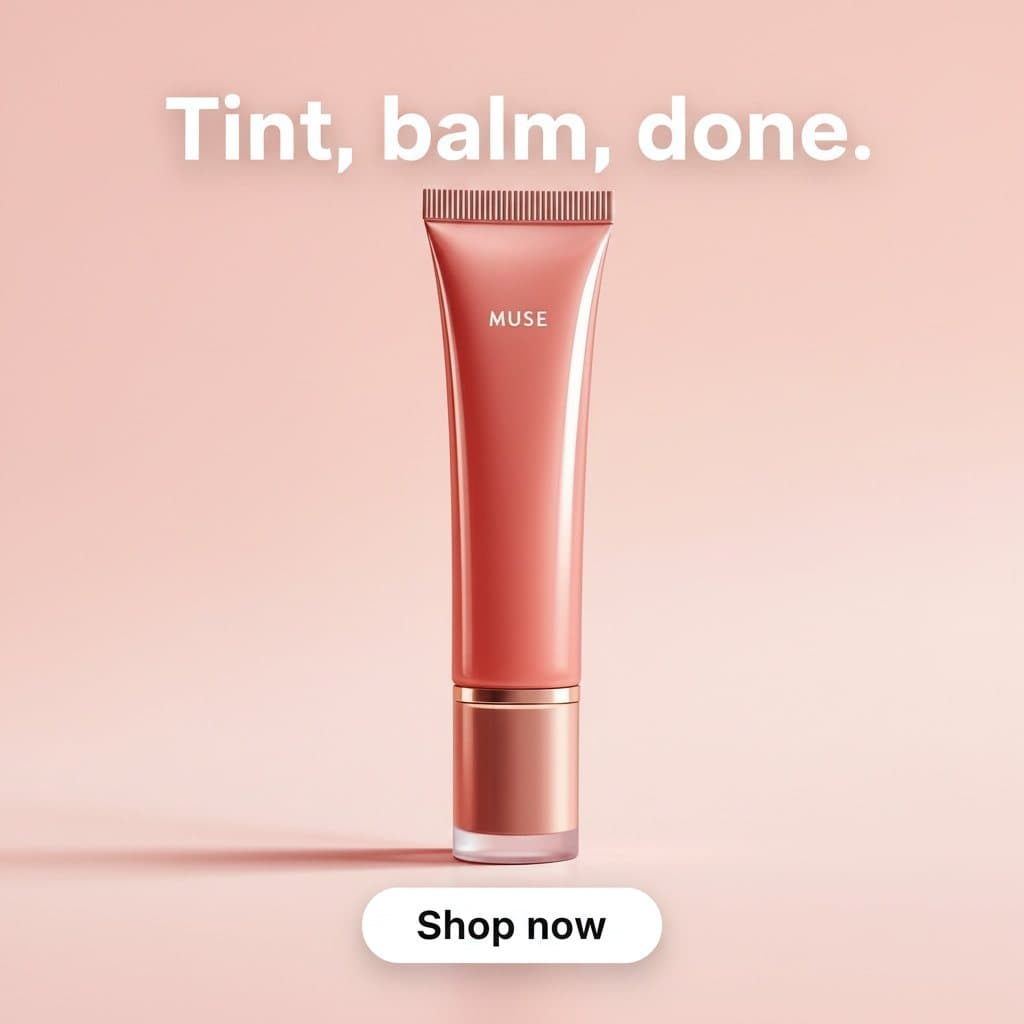
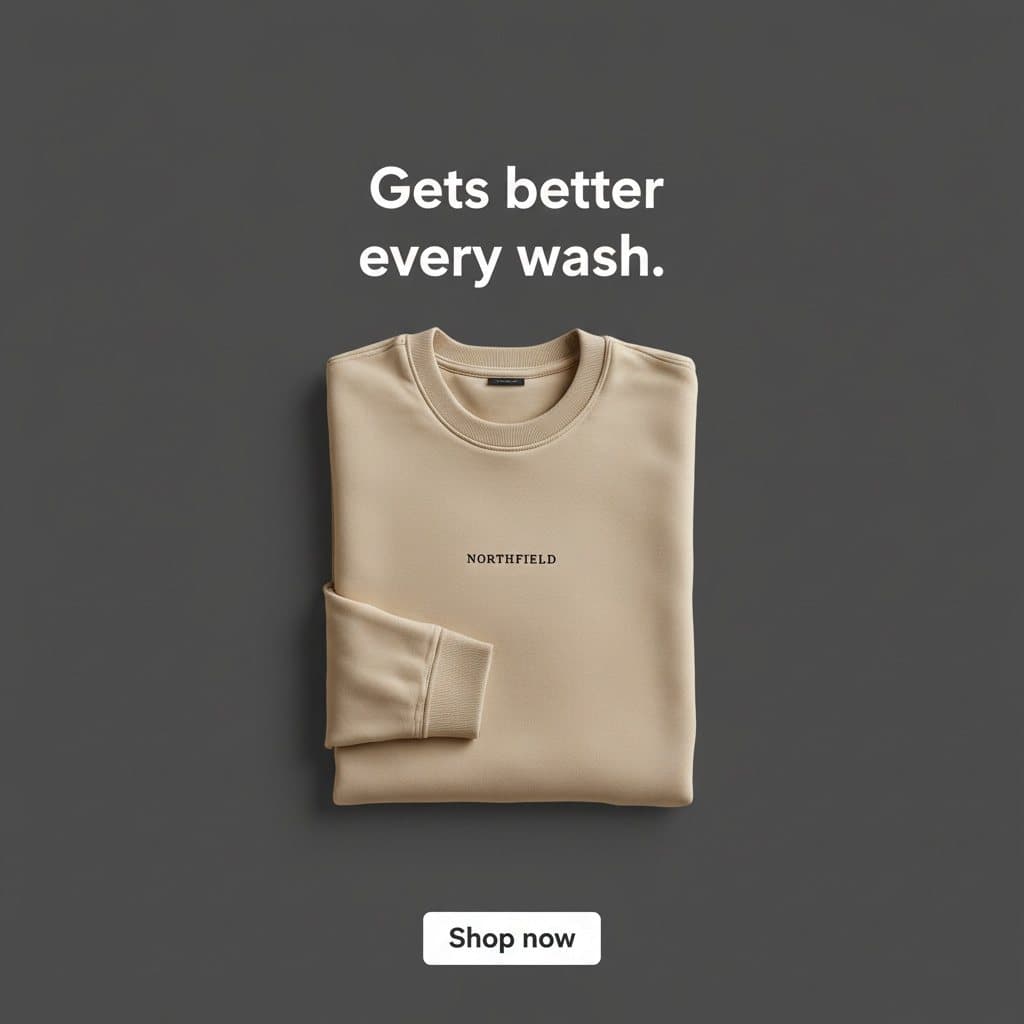
Unedited advrt headline ads for fictional brands. The headline is drawn by the image model, not a template layer.
What kind of static ads does advrt make?
advrt makes single-image ads for Meta and TikTok: product hero shots, lifestyle scenes, UGC-style phone shots and the classic headline static, your product on a clean background with a short line of copy. They're made by editing your real product photo with Nano Banana, Seedream 4 or Flux Kontext, so the packaging is yours. Sizes are 1:1 and 4:5 for feed, 9:16 for Stories and Reels, and 16:9.
The headline is drawn by the image model as part of the picture. That's why it can look designed instead of templated, and also why you need to proofread it: there's no text layer to fix afterwards. advrt has no layer editor; to change a word, you edit the brief and regenerate. For concept ads that are mostly type, advrt also offers Ideogram v3, its pick for on-image text, and Recraft v3. Neither uses your product photo.
At a glance
| Sizes | 1:1, 4:5, 9:16, 16:9 |
|---|---|
| Our output | 1:1 at 1024×1024; 4:5 at 896×1152 |
| Product-photo models | Nano Banana, Seedream 4, Flux Kontext |
| Text-first models | Ideogram v3, Recraft v3 |
| Our audit | 13 headline ads, 0 misspelled headlines |
| Editing | Regenerate; no layers |
How to make a headline static in advrt
Static ads work on every plan; each image is one generation.
- Import the product and keep your best packshot first.
- Pick an angle and put the headline you want in the brief. The image writer only adds text to an image when the brief asks for it.
- Choose 1:1 or 4:5 for feed. 4:5 is the ratio Meta recommends for Facebook Feed images.
- Generate and proofread. Read the headline letter by letter, check the label against your product, and remove anything you didn't ask for.
- Pair it with copy. The angle's primary text, headline field and CTA go into Meta's fields alongside the image.
- Test it against a lifestyle and a UGC-style version of the same angle, and let your account baseline pick.
We audited 13 headline statics. Here's what we found.
Each of advrt's 13 showcase products got one 1:1 headline ad, made with Nano Banana from the product photo. We read every word on every image.
| Product (fictional) | Headline on the image | Characters |
|---|---|---|
| NOVA serum | Meet your new glow step. | 24 |
| MUSE lip balm | Tint, balm, done. | 17 |
| STILL gummies | Wind down, the easy way. | 24 |
| LOWTIDE coffee | Your 7am, upgraded. | 19 |
| Ceramic mug | Your slow morning, upgraded. | 28 |
| NORTHFIELD sweatshirt | Gets better every wash. | 23 |
| ATLAS tote | Carries everything. Goes with everything. | 41 |
| Gold necklace | The one you never take off | 26 |
| Running shoe | Built for the long run. | 23 |
| Sunglasses | Built for long summers. | 23 |
| Ember & Oak candle | Slow evenings, bottled. | 23 |
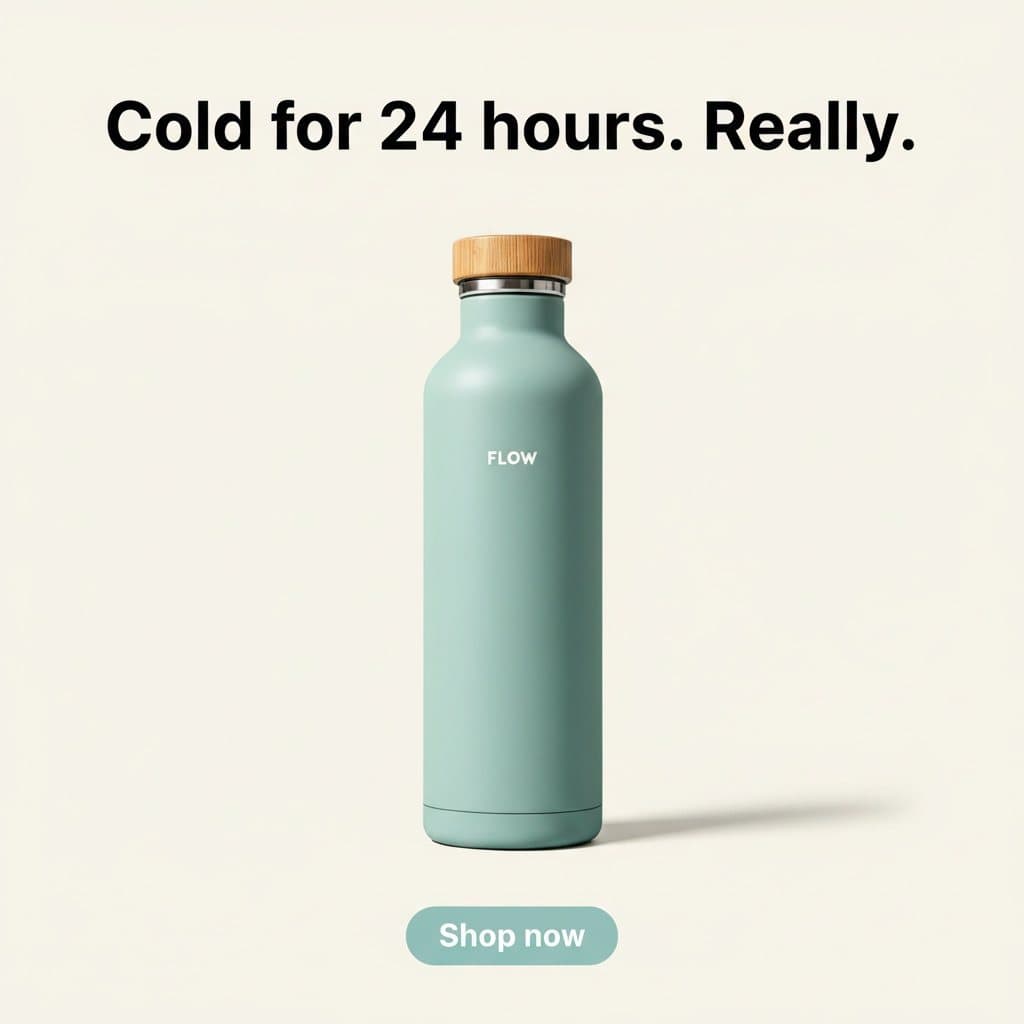
| FLOW bottle | Cold for 24 hours. Really. | 26 |
| GOODBOY treats | Training, but tastier. | 22 |
All 13 spelled correctly. Lengths count spaces and punctuation.
- Spelling held up on headlines. 0 of 13 headlines had a typo. Label text was weaker: one packshot misspelled "magnesium" and the coffee bag's fine print was gibberish, and both carried into the ads.
- 12 of 13 painted a "Shop now" call to action onto the image, most of them as a button. Meta already shows a real CTA button under the ad, so a painted one is a second button nobody can tap. Ask for no button if you'd rather not have it.
- One added a line nobody wrote into the product data. The sunglasses ad says "Free returns". Only run text like that if your store actually offers it.
- Headlines repeat structures. "Your 7am, upgraded." and "Your slow morning, upgraded."; "Built for the long run." and "Built for long summers." Four of 13 share two patterns, so write your own headline into the brief when you want something sharper.
- Length was mostly sensible. 11 of 13 were 26 characters or fewer; the tote's two-sentence line ran to 41.

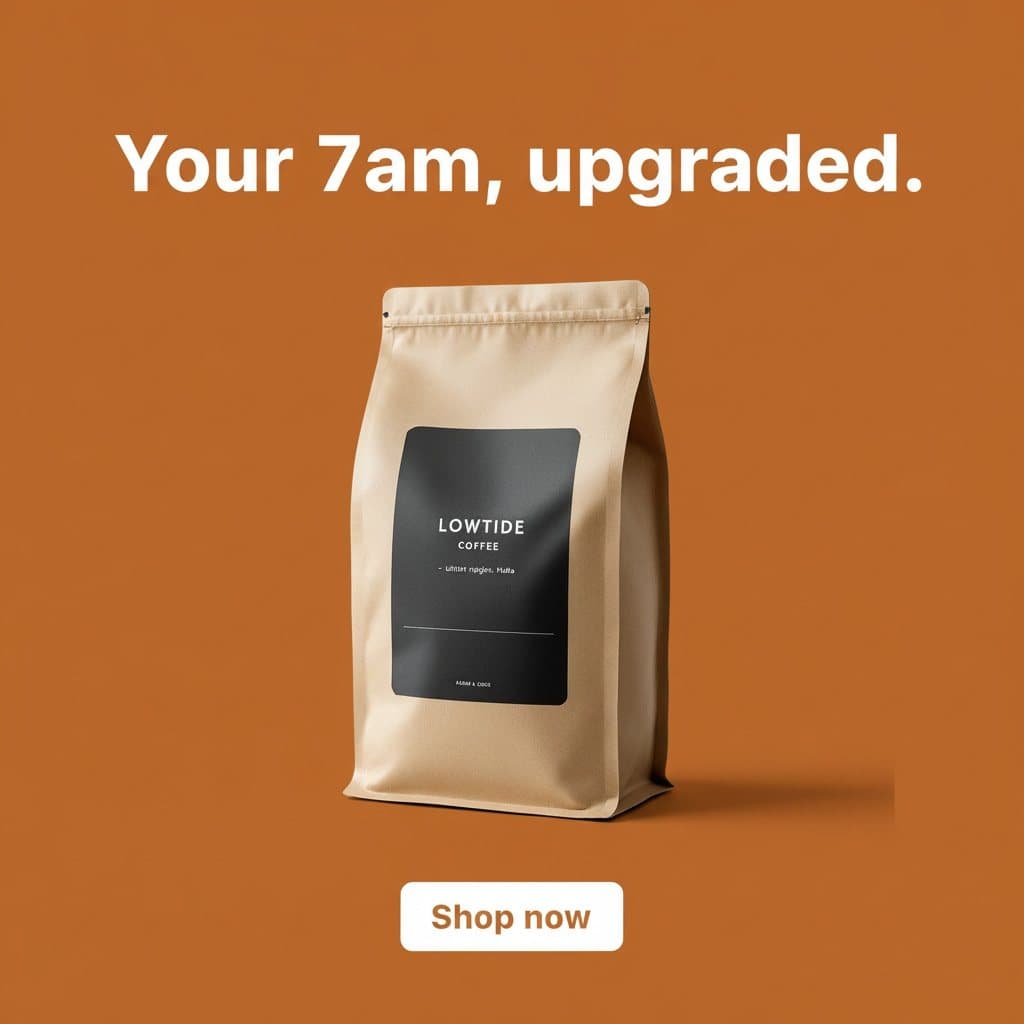
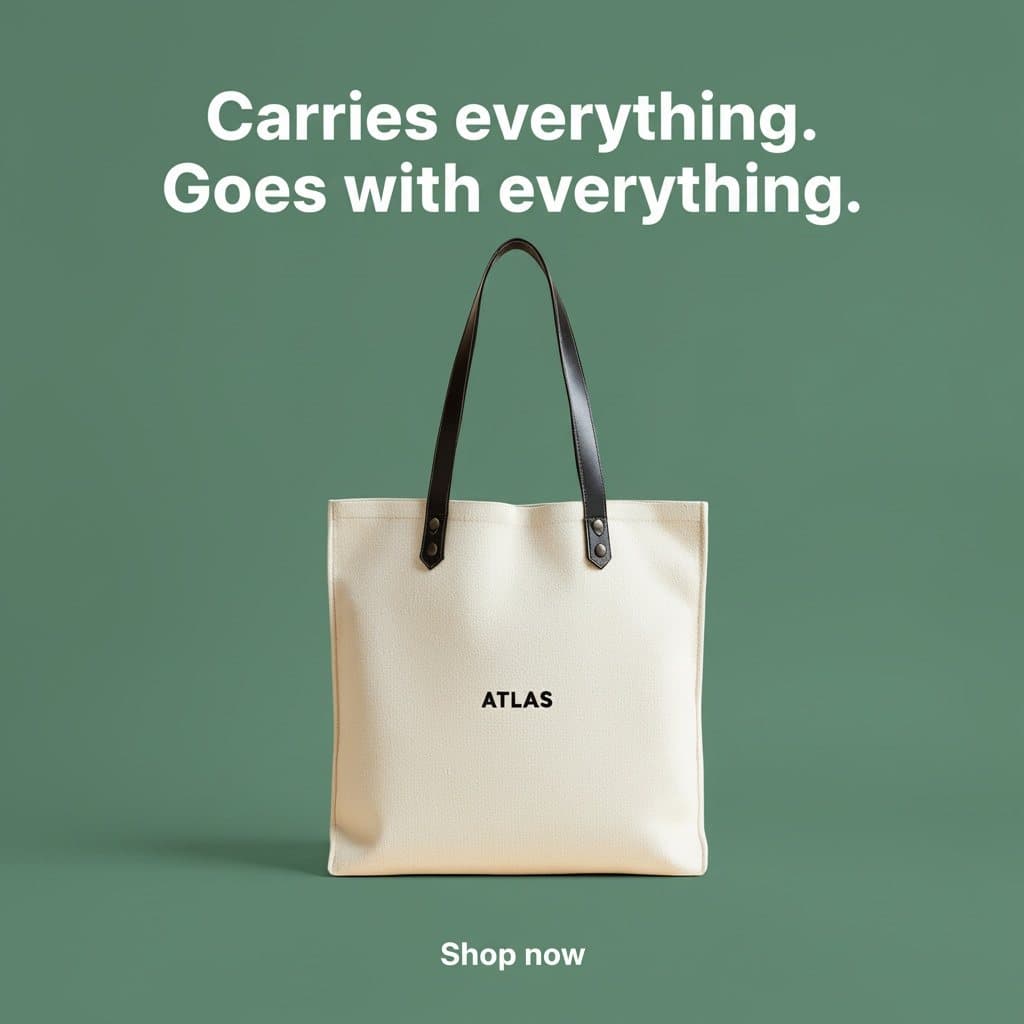
Three things to catch before you publish. Unedited advrt outputs.
Which static formats should you test first?
advrt's angles come in seven formats, and each one implies a different static. The useful test isn't three versions of the same picture; it's two or three formats for the same product, so the result tells you something about what your buyers respond to.
| Format | What the static looks like | Good first test when |
|---|---|---|
| product_hero | Product centred on a clean or coloured background, short headline | The product sells itself on looks or packaging |
| lifestyle | Product in use in a real-looking setting, little or no text | The setting explains who it's for |
| problem_solution | A scene or line that names the problem, product as the answer | Buyers already feel the problem |
| ugc_testimonial | Phone-shot style, a hand holding the product | Your category runs on creator content |
| comparison | Product next to the thing it replaces | There's an obvious old way to beat |
| offer | The deal is the message | You actually have an offer in your product data |
| social_proof | Real reviews or ratings | Your product data includes real reviews |
The angle writer is told never to invent offers, discounts or reviews, so the last two only make sense when your data contains them.
A practical first round for most products is a headline static, a lifestyle scene and a UGC-style shot from the same angle, all at 4:5 for feed. That's three generations and one Meta test, and it answers the most common question new brands have: does a clean product shot or a real-world scene sell better for us?
Do advrt statics meet Meta's image specs?
They meet the requirements and fall short of the recommended resolution. Meta's Facebook Feed guide recommends 4:5 at 1440×1800, JPG or PNG, up to 30 MB, at least 600 pixels wide. Our 4:5 output was 896×1152 and our 1:1 output 1024×1024. In a phone feed that's sharp enough; if you also use the image on a large display, upscale it first.
| Meta | advrt (our test) | |
|---|---|---|
| Recommended ratio | 4:5 | 4:5 available (also 1:1, 9:16, 16:9) |
| Recommended resolution | 1440×1800 | 896×1152 at 4:5 |
| Minimum width | 600 px | Met |
| File type | JPG or PNG | Met |
| Headline field | 27 characters recommended | advrt targets under 40; trim to 27 |
Meta Ads Guide, Facebook Feed image specs, checked October 2026.
advrt vs template tools and design apps
Static ads come from three kinds of tools. The question is whether you want templates, control or your product drawn into a scene.
| Option | Best for | Main tradeoff | Editable text layer |
|---|---|---|---|
| advrt | Product-accurate statics in feed sizes, tested on Meta | Text is part of the image: proofread, regenerate to change | |
| Template ad generators | Many sizes from one layout, brand fonts enforced | Templated look; product is pasted, not placed in a scene | |
| Design apps (Canva, Figma) | Full control over every element | You do the design; no testing | |
| Text-to-image without your photo | Concepts and backgrounds | The product is invented |
Category descriptions are general, not reviews of specific products.
Checked facts
- Meta's Facebook Feed image guide: 4:5 ratio, 1440×1800 recommended, JPG or PNG, 30 MB maximum, 600 px minimum width, 3% aspect tolerance, 27-character headline, 50 to 150 characters of primary text (Meta Ads Guide: Facebook Feed image, checked October 2026).
- Meta's Reels guide asks for 14% at the top and 35% at the bottom to stay clear of key elements, which applies to 9:16 statics in Reels (Meta Ads Guide: Instagram Reels).
- Our audit of 13 advrt headline ads: 0 misspelled headlines, 12 painted CTA buttons, 1 unrequested offer line, 2 label-text errors carried from the source photos.
What it costs
| Plan | Price | Includes |
|---|---|---|
| Free | $0/mo | 5 ad generations / month · 1 brand · AI angles, hooks and ad copy · Ads built from your real product photos · Meta Ad Library swipe file |
| Basic | $19.99/mo | 100 ad generations / month · Up to 5 brands · Everything in Free · Live creative tests on Meta · Winner / loser verdicts vs. your account · Auto-pause losers · Publish to Meta and TikTok |
| Pro | $49/mo | Unlimited ad generations · Up to 50 brands · Everything in Basic · Video ad generation at volume · 14-day free trial |
Prices in USD. Ad spend is paid to Meta or TikTok from your own ad account. Compare plans
Questions
- Can advrt put a headline on the image?
- Yes. Write the headline into the brief and the image model draws it as part of the picture. Proofread it, because there's no text layer to correct afterwards.
- Which size should I use for Facebook Feed?
- 4:5. Meta recommends 4:5 for Feed images. advrt also makes 1:1, 9:16 and 16:9.
- Can I edit the ad after it's generated?
- Not inside advrt. Change the brief and regenerate, or download the image and edit it in Canva, Figma or Photoshop.
- Does advrt use my brand fonts?
- The brand kit, including fonts and colours, is passed to the model as guidance. It isn't enforced, so results can drift from your exact typeface.
- Why is there a Shop now button in the image?
- The model often adds one. Meta already shows a real button below the ad, so ask for no button in the brief if you don't want a painted one.
Related features
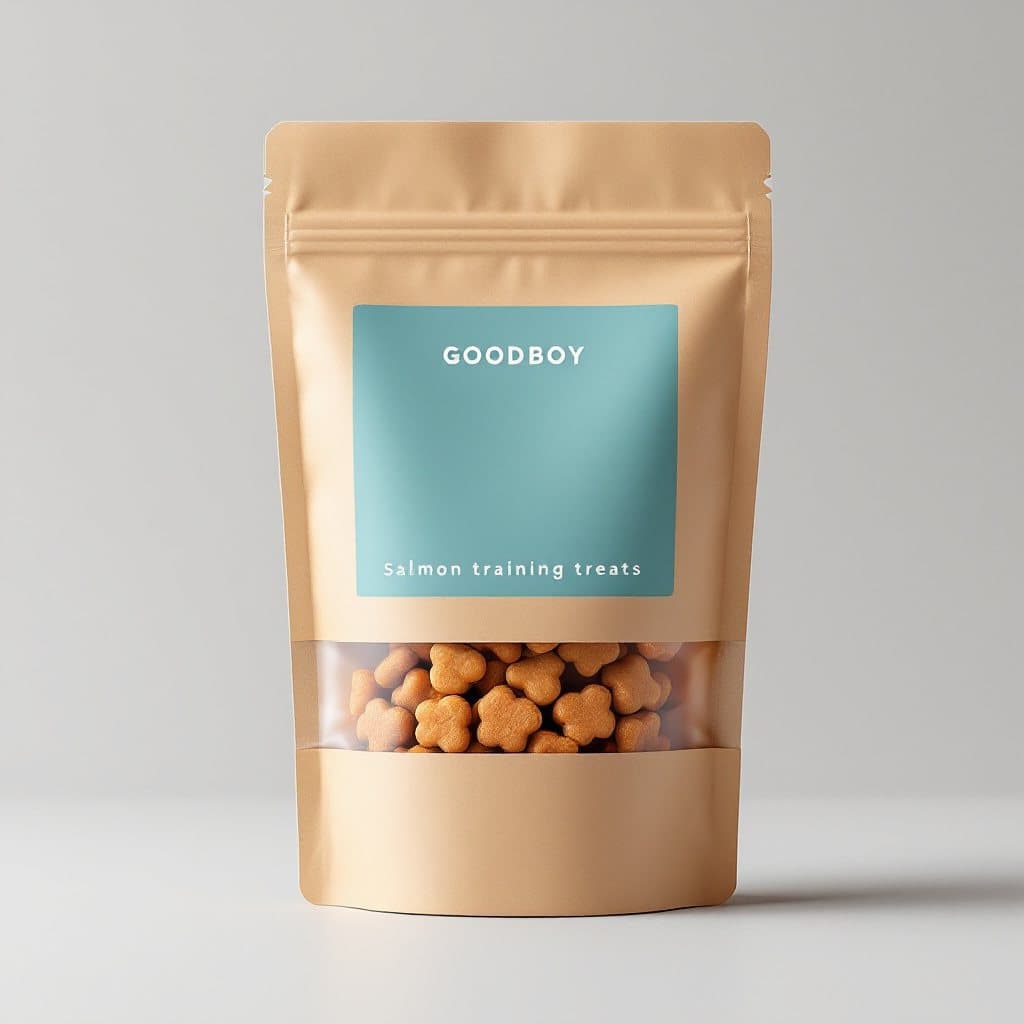 AI product photographyYour packshot, placed into lifestyle and UGC-style scenes without redesigning it.
 Facebook ad copy generatorDistinct angles with hooks, headline, primary text, CTA and a video script.
- Meta creative testingOne ad set per creative, equal budgets, verdicts against your own account's last 30 days.
Further reading
- Best AI image ad generators · Static tools compared
- Best free AI ad generators · Free plans side by side
- Facebook ad generator · Facebook placements and sizes
- Instagram ad generator · Feed, Stories and Reels
- advrt by industry · Static examples by category
- Pricing · Each image is one generation
Sources
External facts checked 19 October 2026.
Your next step
Make a headline static, a lifestyle scene and a UGC-style shot from one angle at 4:5, proofread every word, and test the three against each other on Meta.